Lene Gammelgaard
The ClimbLene Gammelgaard was a Danish lawyer, therapist, and adventurer whose long-held ambition to climb Everest took shape through her relationship with Scott Fischer and his 1996 expedition. She reached the summit, but her ascent was not a simple triumph of individual resolve: the debate over supplemental oxygen, her difficult relationship with guide Neal Beidleman, and the storm-driven descent made partnership and judgment as consequential as ambition.
Identity and Background
Gammelgaard was thirty-four when Fischer invited her to climb Everest. They had met in the Himalaya in 1991 and maintained a personal correspondence in which they discussed his career and personal concerns, her life and ambitions, and their futures. Fischer had gone to Copenhagen to spend time with her while beginning to assemble his Everest team.
The invitation answered a dream she had held for years. No Scandinavian woman had yet summited Everest, and Gammelgaard accepted immediately, without pausing to consider the offer. She described herself as having one more mountain to climb. The goal was both personal and historically specific: to test herself on Everest and to become the first woman from Denmark to reach its summit.
Joining a commercial expedition required raising the fee Fischer had asked for. Gammelgaard worked at it for eight to ten hours a day, making calls, writing, promoting herself, and using press attention to build a public image that might attract sponsors. Fischer offered to help with the fundraising. Even after he left Denmark, her efforts had not reached the target, but she remained committed to the climb; Fischer reassured her that he wanted her on the expedition and that they would work out the financial shortfall.
Independence and Expedition Tensions
Gammelgaard’s determination to climb on her own terms shaped her relations with the expedition guides. She saw Beidleman as mild-mannered and solicitous, but considered his high-altitude experience limited and felt he was too eager to establish himself as a respected guide. She rejected his authority over her and described a conflict in which she insisted she did not need a guide and wanted him to keep away from her. Their tension reflected a real disagreement about how much direction she was willing to accept, not simply a difference in temperament.
The clearest dispute concerned oxygen. Gammelgaard intended to climb without supplemental oxygen, despite having little high-altitude experience. Jon Krakauer, observing her earlier in the expedition, thought that lack of experience made the plan unwise. Fischer’s summit-day plan was for clients to use supplemental oxygen after ascending to Camp III. When he explained this, Gammelgaard remained committed to her oxygen-free objective, and their discussion grew loud and heated.
Anatoli Boukreev spoke with her before dinner, drawing on his own experience of climbing Everest without oxygen in 1991. He explained that he had spent a night at the South Col to improve his acclimatization before descending, and pointed out that Gammelgaard had not climbed above 7,300 metres on the expedition. Since she had no high-altitude experience on which to judge her chances, he urged her to abandon the plan for that attempt. He offered to climb with her another time and help her pursue an oxygen-free ascent if she first succeeded with oxygen. Gammelgaard’s ambition remained clear, but the exchange set it against a guide’s concern about the practical limits of her experience.
Summit Ascent
Before the summit attempt, Gammelgaard was wary of the weather. At the South Col, strong wind continued into the evening after a major storm, and she doubted that setting out in its aftermath was wise. She understood that Fischer and Rob Hall had agreed to have their teams leave together. Her concern did not stop her from climbing, but it shows that her resolve did not amount to indifference to conditions.
The expedition’s oxygen arrangements formed part of the context for the attempt. Mountain Madness had sixty-two canisters at Camp IV: nine Zvesda canisters and fifty-three lighter Poisk canisters. Six Sherpas were climbing with the expedition; five planned to use oxygen, while climbing sirdar Lopsang Jangbu Sherpa climbed without it. The five oxygen-using Sherpas carried supplies for themselves as well as additional canisters for clients and guides. Gammelgaard, who had argued against oxygen, was therefore climbing within a team whose summit plan depended on carrying and sharing it.
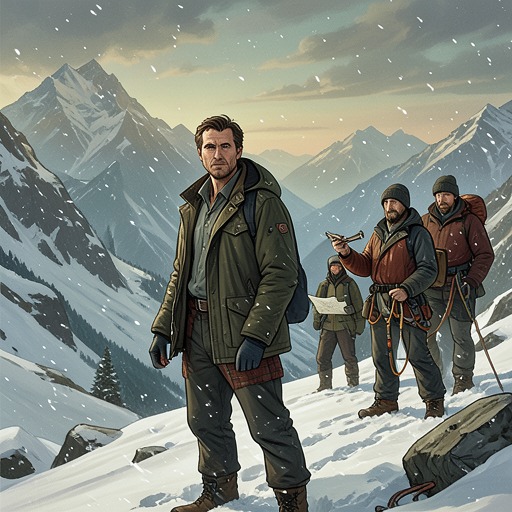
On the morning of the climb, Fischer was the last client or guide to leave Camp IV, in accordance with the agreement that he would act as sweep. Gammelgaard, the next-to-last climber to depart, doubled back when she noticed he was not close behind. She was relieved to see him using oxygen: she had urged him either to use it or remain at camp to guide from there. Once reassured, she rejoined the group. She also recognized that she did not want to be alone on summit day, despite having climbed independently on earlier parts of the expedition.
Near the summit, Gammelgaard noticed a whiteout advancing from the valleys and wind strengthening over the summit before she went over the Hillary Step. The observation foreshadowed the danger awaiting the climbers on their descent. She reached the summit and encountered Fischer coming down; she hugged him, and he congratulated her. The meeting briefly joined her achievement to the expedition leader who had recruited her, even as the deteriorating weather was turning the descent into the more urgent test.
Descent and Storm
On the descent, Gammelgaard joined Klev Schoening, with whom she said she felt confident because they approached the mountain in a similar way. They tried to descend as quickly as possible. Gammelgaard was running out of oxygen, and Schoening repeatedly stopped and urged her to take oxygen from him. She initially refused, but he could see that oxygen deprivation was affecting her. The exchange reverses the emphasis of her earlier plan: at a critical moment, the practical question was not whether she preferred an oxygen-free ascent, but whether she would accept assistance while trying to get down.
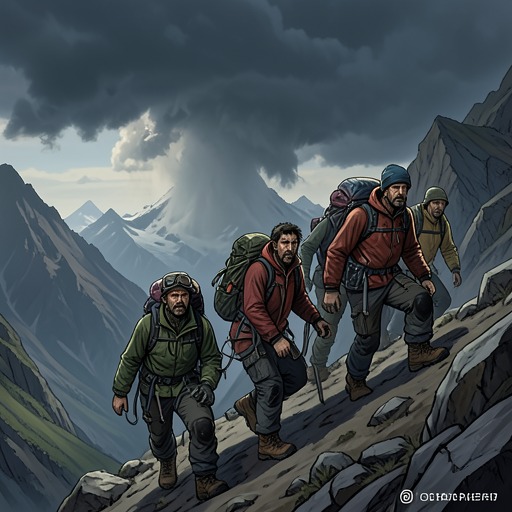
The climbers lost their way in the storm while searching for Camp IV. At first Gammelgaard and Schoening led the attempt to find it; Beidleman wandered before eventually rejoining them. Gammelgaard decided that trusting Schoening was as good a course as any. When she saw a light, she recognized that it came from a headlamp and directed them to turn left toward it. It proved to be Boukreev’s headlamp. In the whiteout, a small point of light became a navigational clue, and Gammelgaard shifted from following a trusted partner to making the call that moved the group toward camp.
Her account does not describe the descent as a continuous conviction that the group would die. She said she did not think she was snowblind and was not overcome by fear or adrenaline; at no point did she believe death was certain. That recollection offers a measured counterpoint to the severity of the storm: she records the danger without claiming a state of terror she did not experience.
The wider consequences of the night make the limits of rescue stark. Yasuko Namba had been found above Camp IV by Beidleman, with help from Tim Madsen, and brought to the South Col, where she sheltered with Beck Weathers. When Mike Groom, Beidleman, Schoening, and Gammelgaard made their way to Camp IV, Namba lacked the strength to follow; Groom could not persuade members of his expedition to join a rescue effort. Gammelgaard’s successful return therefore belonged to a larger ordeal in which reaching shelter did not mean everyone could be brought with her.
Aftermath and Significance
Gammelgaard was one of the clients present at the Mountain Madness debriefing, alongside Beidleman, Boukreev, Lopsang, expedition doctor Ingrid Hunt, and five other climber-clients. Her presence placed her not only among those who had experienced the climb, but among those recounting and examining it afterward. Charlotte Fox was absent because she had been airlifted from Everest Base Camp to Kathmandu for frostbite treatment; Dale Kruse was also absent, having left the base camp without making a summit attempt.
On May 22, Gammelgaard departed Kathmandu with the last of the Mountain Madness clients. She had frostbitten fingers, but no injury that required amputation. The expedition’s aftermath thus held both achievement and cost: she had reached the summit, survived the storm, and left with her fingers intact, while carrying the consequences of the mountain’s exposure.
Gammelgaard’s account complicates any simple portrait of her as either a self-sufficient climber or a client who needed to be directed. She resisted a guide’s authority and initially rejected oxygen, yet she chose to climb with Schoening, accepted his repeated offers of oxygen, and used her own judgment to steer the group toward Boukreev’s light. Her story turns on that combination: independence mattered, but survival on the descent also depended on trust, assistance, and attention to what the conditions demanded.